Routing Comes First for a Flagstone Walkway Contractor in Santa Cruz, CA
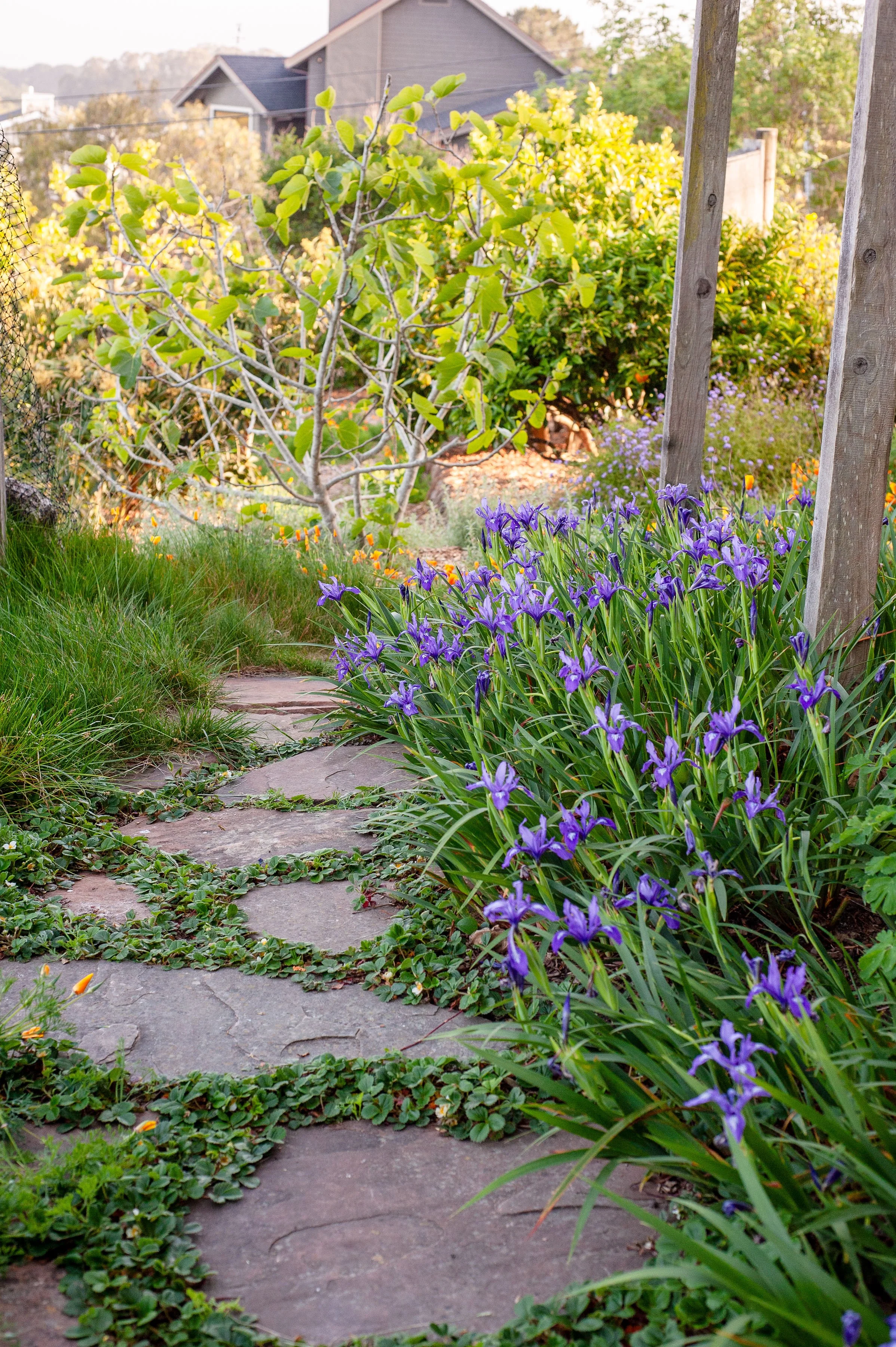
Routing takes longer to settle than stone selection, and a flagstone walkway contractor in Santa Cruz, CA will tell you why. Choosing the stone is a pleasant afternoon. Deciding where the path goes determines whether the garden gets easier to work or quietly harder.
Orchard Keepers began with home orchards in 2004 and has grown into full edible landscape installation across Santa Cruz County.
We lay pathways and patios with intention, around the living parts of a garden rather than through them. These are the questions that come before the stone arrives.
How Wide Should a Flagstone Garden Path Be?
A working garden path needs room for the widest thing that travels it, which in a productive garden means a wheelbarrow or harvest cart. Main routes run about four feet wide, and secondary paths to a seating spot work at closer to three.
A path people walk is one thing. A path you move along with a basket on one hip, push a cart down or drag a hose along without catching an edge needs more room and gentler curves than a plan drawing suggests.
Working paths through orchard rows and growing beds are sized for the work. The ornamental path to a bench can stay narrower, because nothing heavier than a coffee cup travels it.
Where Should a Flagstone Path Run Through a Productive Garden?
A flagstone path belongs along the lines people already walk. The desire path worn into the lawn over two seasons is better information than any drawing, because it shows where people go rather than where somebody thought they should.
Paths also need to pass close enough to trees and beds to serve them without running over the root zone where the feeding roots sit. In practice that means skirting the canopy rather than cutting under it.
Routing gets checked against the chores, too. The route from the back door to the compost, the hose bib and the harvest beds carries the most traffic, so it earns the firmest surface and the most direct line.
What Happens to a Flagstone Path Through a Wet Santa Cruz Winter?
A flagstone path on a properly prepared base drains and stays level through a wet Santa Cruz winter, while one set on unprepared soil shifts, holds puddles and turns slick. Our winters put real water through the ground, and the base decides which of those outcomes you get.
A correct base drains underneath rather than holding water at the surface. Compacted gravel beneath the stone carries runoff away from the walking surface, so the flagstone stays seated after the heaviest storms.
Stone texture matters in shaded sections. Textured flagstone keeps footing on grey mornings, when the path is the route to the back door and damp sits on the surface well past noon.
What Goes Between Flagstones in a Garden Walkway?
Joint fill between flagstones decides how the path behaves and how it reads. Tight joints give a firm, formal surface that is easy to roll a cart across.
Open joints filled with gravel or planted with low creeping plants soften the line, let rain pass straight through and tie the path into the planting around it. They suit ornamental routes where nobody pushes a loaded barrow.
Decomposed granite, flagstone, natural stone, concrete and wood make up our common palette, and the joint treatment is chosen with the whole garden in mind rather than the path alone.
How Does a Flagstone Walkway Fit Into a Wider Garden Plan?
A flagstone walkway shapes circulation and defines spaces, which is why we treat it as part of the installation rather than a finishing touch. Paths settle where beds end, how the orchard is divided and where someone naturally pauses.
Our Garden Structures & Hardscape work covers pathways, patios, arbors and trellises as one piece of the edible landscape rather than as separate purchases.
An arbor at the end of a path gives the route a destination, and a trellis along it puts the growing wall where hands can reach the harvest.
Plan a Flagstone Walkway for Your Santa Cruz, CA Garden
A path laid along the way you move makes the whole garden easier to tend. Orchard Keepers designs and installs stone pathways and patios as part of edible landscapes across Santa Cruz County, Los Gatos, Saratoga and the greater South Bay.
Contact Orchard Keepers to walk the ground and plan flagstone walkway routes before the winter planting season.
In Summary
When is the best time to install a garden path in Santa Cruz, CA?
Autumn is a strong window for installing a garden path in Santa Cruz, CA. Hardscape laid before the heart of the wet season gives the base time to settle, and finishing the paths first means the winter planting that follows goes in around a garden that is already easy to move through.
How can a stone path be added to a mature orchard without harming the trees?
Routing the path outside the drip line keeps excavation away from the feeding roots of a mature orchard. Orchard Keepers uses hand work near established trees to avoid compacting the soil they depend on, so the route gets drawn around the trees rather than the trees worked around the route.
How much maintenance does a stone pathway need?
A stone pathway needs light seasonal maintenance rather than constant upkeep. Open joints need occasional weeding or topping up, planted joints get a trim, and shaded sections benefit from a cleaning where damp encourages growth on the surface. A well-based path mostly asks to be swept and left alone.