Garden Patio Company in Santa Cruz, CA: Sizing a Terrace Around How the Garden Gets Worked
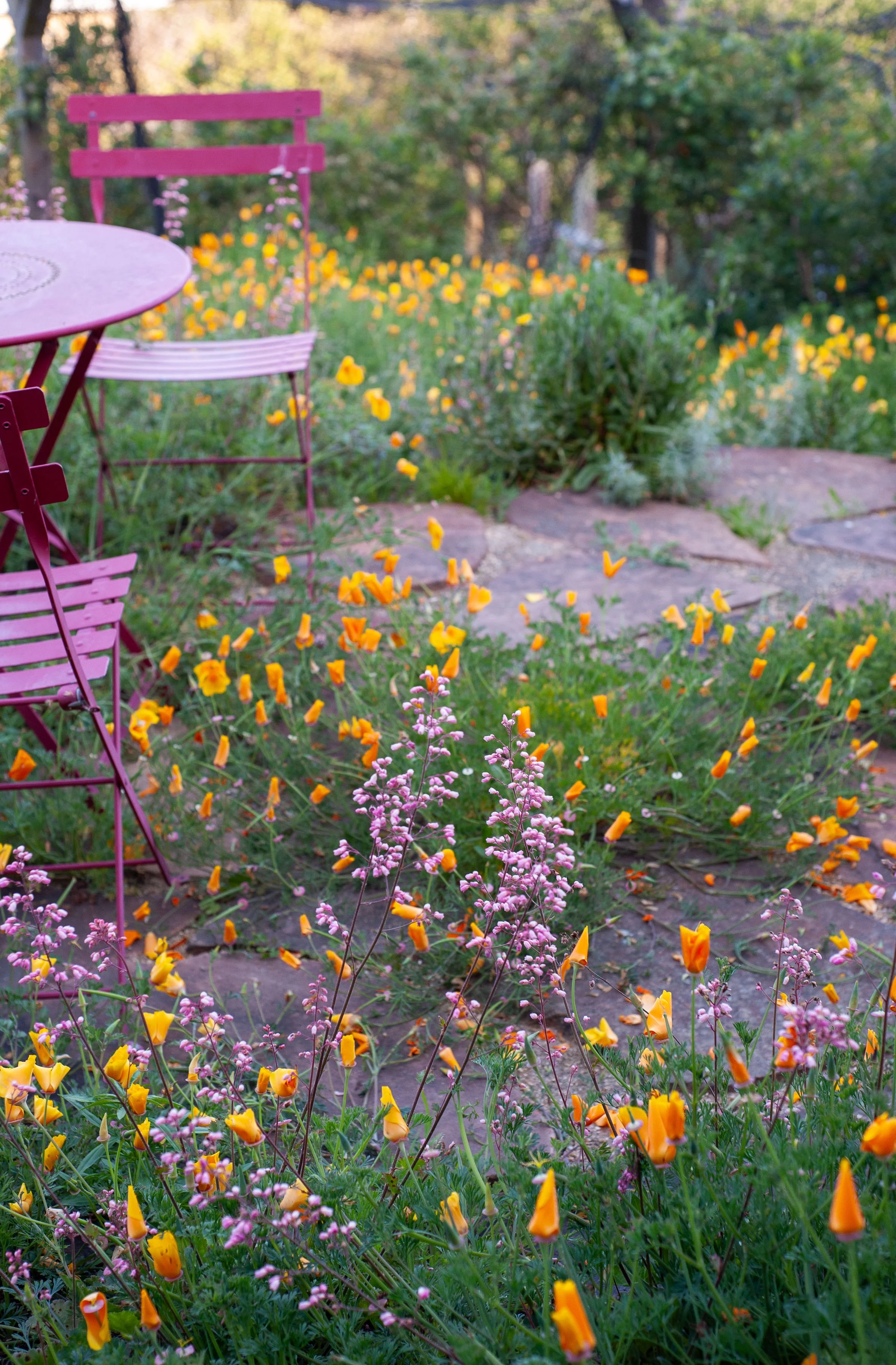
Harvest season exposes the problem with a pretty terrace. Someone searching for a garden patio company in Santa Cruz, CA usually pictures a place to sit, and then finds there is nowhere to set down a full crate of apples, rinse a bunch of chard or park a wheelbarrow while pruning.
Orchard Keepers has grown since 2004 into a team of horticulturists, builders and gardeners caring for hundreds of home orchards and edible landscapes across Santa Cruz County and the greater South Bay.
We are a plant company that builds, which shapes how we approach it. Our garden structures and hardscape work exists to serve the planting around it, so a terrace gets located and sized according to how the garden is actually used across a year.
Related: Kitchen Garden Services in Santa Cruz, CA Should Start With What You Eat
What Does a Working Garden Terrace Need That a Decorative One Does Not?
Clear floor and a hard edge. Somewhere to put a crate down without it tipping, a surface that tolerates soil and water being dragged across it, and enough room to move past a seated person carrying something in both hands.
A bench built into the stone edge does more work than a set of chairs, because it stays where it is when the space is needed for a task. Built-in seating also leaves the middle of the terrace open, which is the part that gets used during harvest.
A water source belongs in the plan as well. A hose bib or a rinse station at the terrace edge saves carrying produce to the house and back, and it decides where the drainage has to go.
Where Should a Terrace Sit Relative to the Orchard?
Close enough to be used, far enough to stay out of the root zone. Between canopies rather than beneath one keeps compaction away from established fruit trees and keeps the terrace out of the fruit drop line, which nobody enjoys sitting under in September.
Placing it where the main garden path arrives means it becomes a natural staging point rather than a detour. A terrace at the end of a spur gets used for coffee and little else.
Think about the view back toward the house too. A terrace that faces the beds gives you somewhere to sit and plan the next task, while one that turns its back on the garden tends to feel like a separate room.
How Does Midday Shade Affect Where the Terrace Goes?
It decides whether the space gets used in July. A west facing terrace on the Central Coast is unusable through late afternoon in summer and pleasant in October, which may suit some households.
Reading the shade cast by existing trees across a full day is more reliable than adding a structure later to fix a placement that was wrong from the start. Deciduous fruit trees change that reading between March and August, so the summer canopy is the one that counts.
Coastal fog adds its own pattern. On a Westside lot the morning burn-off arrives hours later than it does in the hills, and a terrace sited for afternoon sun in one location is sited for damp shade in the other.
Related:Why Native Plantings Belong in a Central Coast Garden in Santa Cruz, CA
Which Surfaces Suit a Garden That Gets Worked?
Decomposed granite compacts firm enough for a wheelbarrow and sweeps clean. Flagstone set with open joints gives a solid table footing while letting rain through.
Both handle the soil, compost and water that a productive garden generates, and both can be extended in stages as the planting matures, which a poured surface cannot. That matters on a property where the orchard is still filling in.
Each asks for a little upkeep. Decomposed granite needs topping up in the traffic lines every few years, and open joints need weeding, both of which are minor next to cutting into a slab when the layout changes.
How Do Paths and Terrace Work Together?
They form one route. A terrace reached by a path too narrow for a wheelbarrow is only half connected to the garden it belongs to.
We set path widths against what has to travel along them, keep turns generous enough for a loaded barrow, and run the stone edge continuously so the transition from path to terrace does not catch a wheel.
Grade is the other half of that. A short run of steps in the middle of a harvest route turns a barrow trip into two trips, so a gentle ramped path usually beats the tidier-looking staircase.
Design a Santa Cruz Terrace That Serves the Planting
A terrace laid out around real garden tasks gets used far more than one placed for the view alone. The layout follows the work, and the surfaces and path widths follow the layout.
Orchard Keepers designs and builds garden terraces, paths and stonework as part of edible landscapes across Santa Cruz County, and a site visit is where the layout gets settled.
In Summary
How much level ground does a working garden terrace need?
A terrace of roughly ten by twelve feet holds a table, two chairs and enough clear floor to set down harvest crates and turn a wheelbarrow. Smaller works for sitting alone. Below about eight feet across, the space stops being usable once anything is put down on it.
Does a permeable surface suit a Santa Cruz garden?
Permeable surfaces are the better fit on most properties here. Decomposed granite and stone set with open joints let winter rain move into the soil beneath rather than shedding it toward the nearest bed, which matters on the sloped lots common through the county. Spilled soil and compost also sweep off easily.
Can a terrace be added to an established orchard without damaging trees?
Adding a terrace to an established orchard works in most cases, provided the layout respects the root zone. Orchard Keepers locates the terrace between canopies rather than under them, hand digs where roots are present, and avoids compacting the ground within the drip line of an established fruit tree.
Related: How a Flagstone Patio Settles Into a Garden Rather Than Paving Over It in Santa Cruz, CA