how to plant a bare root tree

Planting Fruit Trees

Growing a fruit tree is a lifelong endeavor, so take the time to consider placement.  Here are the basics:


Sunlight

Fruit trees need a minimum of 6-8 hours of sunlight during the growing season.  For deciduous fruit trees, being in the shade during the winter is fine.  Citrus, avocados, and other evergreen fruit trees need sun all year round, as they do not go into a winter dormancy.
 

Good drainage

If drainage is an issue, plant onto a mound so that the planting zone drains faster.
 

Access to water

The first 3 years of a tree's life in the ground are very important years.  You must grow the tree aggressively to achieve optimum size in order to start fruiting in year 3,4, or 5.  Regular watering plays a huge role in the development of the tree's canopy.


Protection from deer


Hot spots

Here in Santa Cruz we often go all summer without much heat.  We need to capture the heat that we have for our sun-loving, sugary stone fruits and citrus.  If you have a south-facing wall or rock/cement patio, plant these trees so that they receive reflected heat from these structures.


Here is a basic guideline for planting a bare root fruit tree:


-Choose your site

-Check to make sure the soil is neither too wet nor too dry

-You will need a shovel, garden fork, long-handled rake, fertililzer, compost, and mulch


-Dig a hole 2'x 2' x 18" deep

-Dig a larger hole if you plan on using a gopher basket

-When digging, notice when you encounter a different colored soil- this is your subsoil.  Keep it separate from your topsoil, making 2 piles. 

-As you dig in clay soils, slick sides can develop from the back of your shovel.  

-Fracture the sides of your hole with the garden fork.  If not, these slicks can harden and become an inpenetratable wall that the roots will have a hard time growing in.

-Penetrate the bottom of the hole with the garden fork to aerate the soil.

-Backfill your hole with about 80% of the soil you removed-  Subsoil goes in first, then topsoil.

-Use a long-handled rake or shovel to lay across the hole to find your soil level.

-Set the tree so that the top roots are just below the soil surface and the graft union scar is facing north.


-Once the tree is set in its place, backfill with the remaining soil.

-Once the roots are covered, hold onto the trunk of the tree and gently pull up as you use your foot to compact the soil all around the tree's roots.

-It is important to fill in all air gaps around the roots with the backfill soil- this ensures that the roots will not dry out.

-Create a circular burm 18" from  the trunk of the tree- this is the area where you will apply fertilizer, compost, and mulch


Top Dressing

-Apply an organic fruit tree fertilizer and 1-2" of compost inside the burm and mix it with the surface soil.

- Fill the burm up with water, let it settle, and then do it again-soaking the tree in like this will usually take care of its water needs until the rains end.

-Add cover crops or green plant material 2-4"on top of the fertilizer and compost

-Keep all plant material 4-6" away from the trunk of the tree

-Optional: top with cardboard as a weed suppressant


-Optional: lay your drip tube or micro sprinkler tubing first

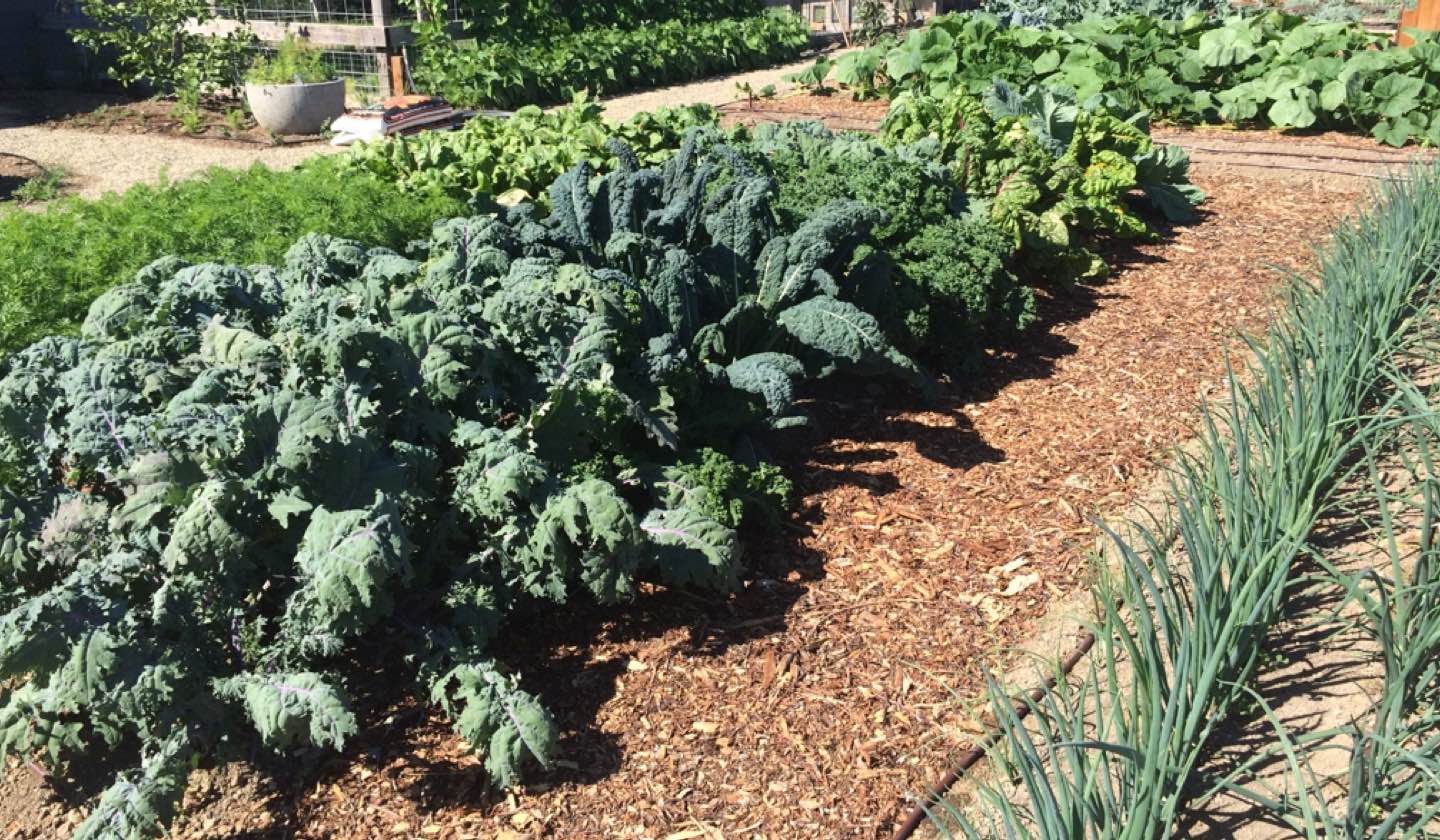
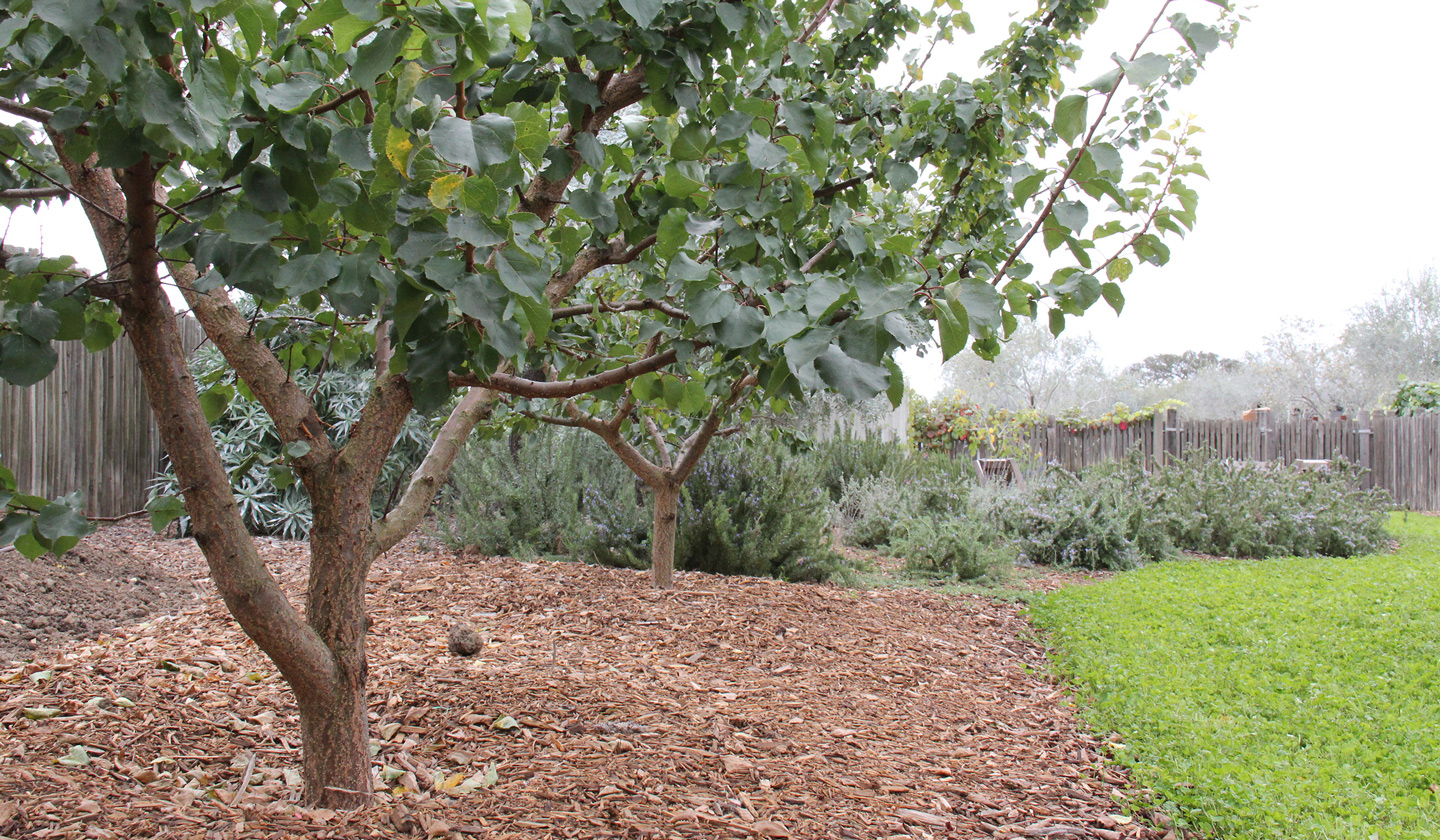
-Top everything off with 3-5" of mulch (wood chips, leaves (non-fruit tree), straw, etc.))

-Your tree is planted and ready to grow!

-Follow this top dressing program for the first 3 years of the tree's life.

-Mulch can take a couple of years to break down. So, if there is plenty of mulch in year 2, simply pull it away from the tree, apply your compost/fertilizer/greens, and then push mulch back where it was.

-After year 3, follow these same steps, but if you have achieved your desired tree size, there is no need to apply fertilizer.